



High-Output PVC Compounding with an HTM Tandem Extruder

Polyvinyl chloride (PVC) is widely used in rigid pipes, building materials, cable insulation, medical tubing, and many other products. However, PVC processing presents unique challenges. Both rigid and flexible PVC formulations rely on additives such as plasticizers, fillers, and stabilizers. During the compounding stage, PVC is highly sensitive to heat and shear, which can accelerate thermal degradation, cause quality defects, and increase the risk of equipment damage. As a result, achieving simultaneously high mixing performance and high throughput is difficult with conventional extrusion systems.
CTE’s HTM Tandem Compounding Twin-Screw Extruder was developed to address these challenges. Built on our patented non-intermeshing, counter-rotating twin-screw technology, the system delivers superior degassing, high-intensity mixing, and low-temperature extrusion—capabilities that are particularly advantageous for PVC. Over decades of operation, the HTM Tandem system has accumulated extensive performance records and application know-how across a wide range of PVC compounds.
This article explains the technical challenges of PVC compounding and how the HTM Tandem system provides a stable and high-quality processing solution.
Technical Challenges of PVC Compounding
Conventional intermeshing co-rotating twin-screw extruders rely heavily on kneading discs to achieve dispersion. These elements require high screw speeds to generate mixing forces—conditions that cause excessive shear heating and lead to PVC degradation. For this reason, PVC has traditionally been processed using intermeshing counter-rotating twin-screw extruders, which provide a gentler mixing mechanism.
In intermeshing counter-rotating systems, the two screws fully engage with each other. Material is compressed and sheared between the screw flights, similar to a roll-mixing action. This allows mixing at low screw speeds, reducing heat buildup and enabling PVC compounding at lower temperatures.
However, these conventional systems have a critical limitation: When screw speed is increased to improve throughput, material wedges between the engaged screws, forcing them against the barrel and causing metal-to-metal contact (galling). This makes high-speed, high-output operation impractical and restricts production capacity.
CTE addressed this fundamental problem by developing a non-intermeshing, counter-rotating twin-screw design. This structure eliminates direct screw engagement, allowing higher screw speeds without the risk of galling—and enabling both high-intensity mixing and high throughput, even with heat-sensitive materials like PVC.
Solutions Enabled by the HTM Tandem Compounding Twin-Screw Extruder
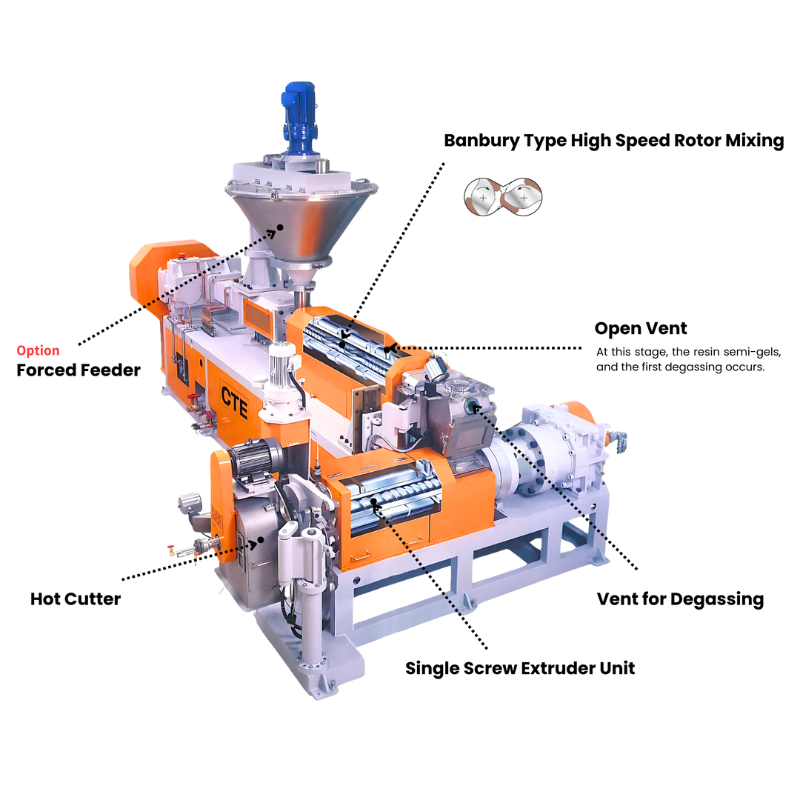
View the product details here: HTM Tandem Compounding Twin-Screw Extruder
1. Rotor-Based Mixing—High-Intensity Mixing With Minimal Heat Generation
The HTM system uses rotor mixing elements, which provide a mixing mechanism similar to a continuous Banbury mixer. Shear and compression occur in the controlled clearance between the rotor and barrel. After each short, high-shear event, the material is immediately released.
This repeated cycle of compression → shear → release enables:
- High mixing intensity
- Short residence time under shear
- Significantly reduced heat buildup
This mechanism allows PVC to be dispersed effectively without triggering thermal degradation.
2. Superior Degassing Performance
The twin-screw section is non-intermeshing, providing a fixed gap between the two screws. This structure enhances gas release and prevents feed restriction. In addition, the optional hopper screw (forced-feeding device) and rear venting system further improve material intake and stabilize processing of PVC formulations that contain volatiles or moisture.
3. Stable Low-Temperature Extrusion Through the Tandem Configuration
In the HTM Tandem system, the twin-screw compounding section is directly connected to a separately driven single-screw extruder.
By splitting mixing and extrusion into two independent stages, the system enables:
- Low-temperature, low-speed operation of the single screw
- Efficient cooling from both the barrel and screw side
- Stable extrusion even for highly heat-sensitive PVC grades
This design ensures consistent product quality while maintaining high throughput—an essential factor in industrial PVC compounding.
Application Examples and Proven Performance
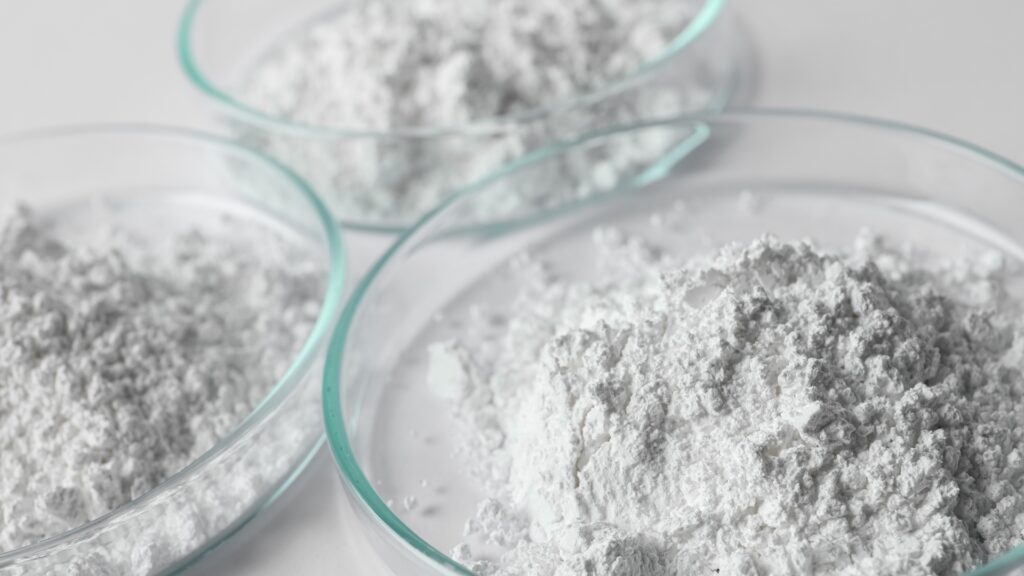
CTE has achieved stable processing results in demanding PVC formulations such as:
- R-PVC + Talc (33%)
- R-PVC + Calcium Carbonate (50%)
- R-PVC + Wood Flour (70%)
- R-PVC + Cellulose Microfiber (CMF)
These materials are difficult to process with conventional systems due to the risk of burning, poor dispersion, or inability to handle high filler ratios. The HTM Tandem Compounding Twin-Screw Extruder provides an effective solution for all of these challenges.
Conclusion
The HTM Tandem Compounding Twin-Screw Extruder delivers high-intensity mixing, superior degassing, and stable low-temperature extrusion—capabilities that make it exceptionally well-suited for PVC compounding. Even with materials that are highly prone to thermal degradation, the system minimizes burning while achieving high dispersion and high throughput.
For manufacturers facing challenges in PVC compounding or seeking higher productivity without compromising material quality, CTE offers machine demonstrations and material testing upon request.