



What Is High-Filler Compounding?
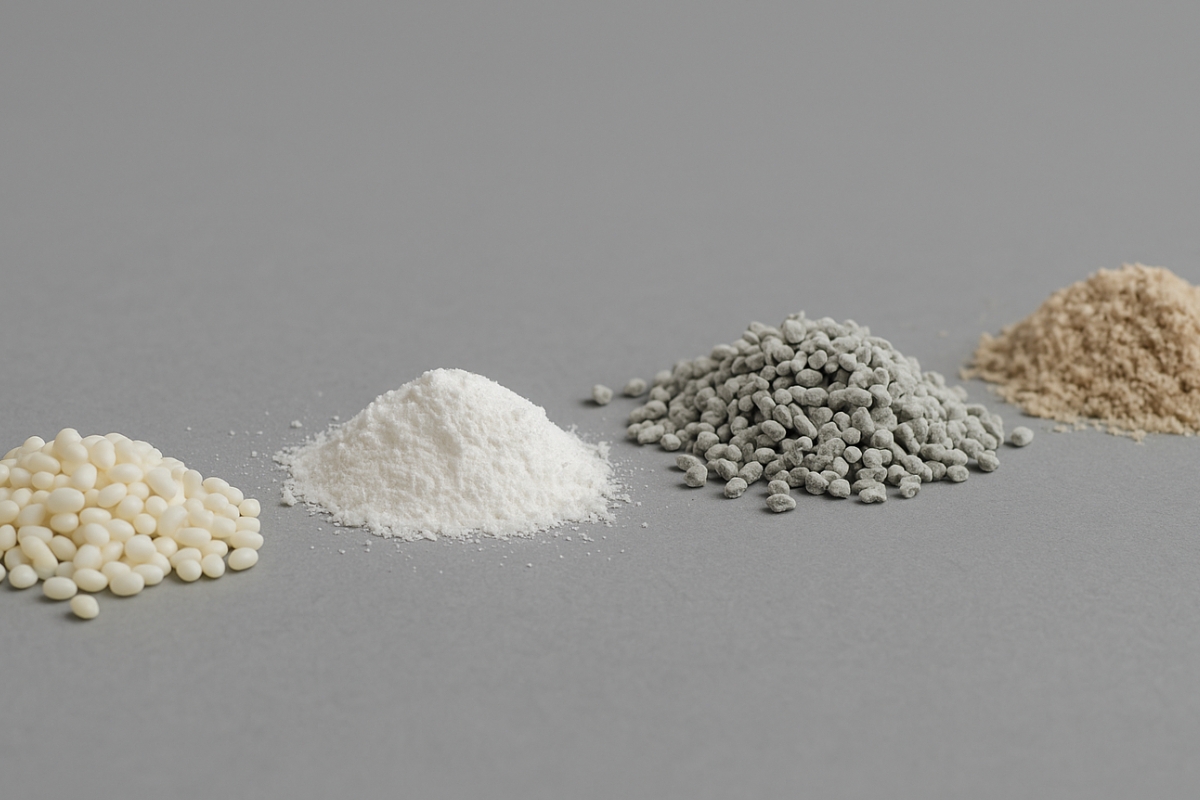
Fillers are essential in plastics processing. They enhance properties that base polymers cannot provide, improve performance, and help control material costs. This article explains the fundamentals of fillers, how high-filler compounds work, the processing challenges they introduce, and how CTE’s HTM Twin-Screw Extruders address these issues—supported by real evaluation data.
For an overview of the HTM Twin-Screw Extruder platform, see our HTM Twin-Screw Extruder overview, which introduces the patented counter-rotating, non-intermeshing screw design used throughout this article.
What Are Fillers?
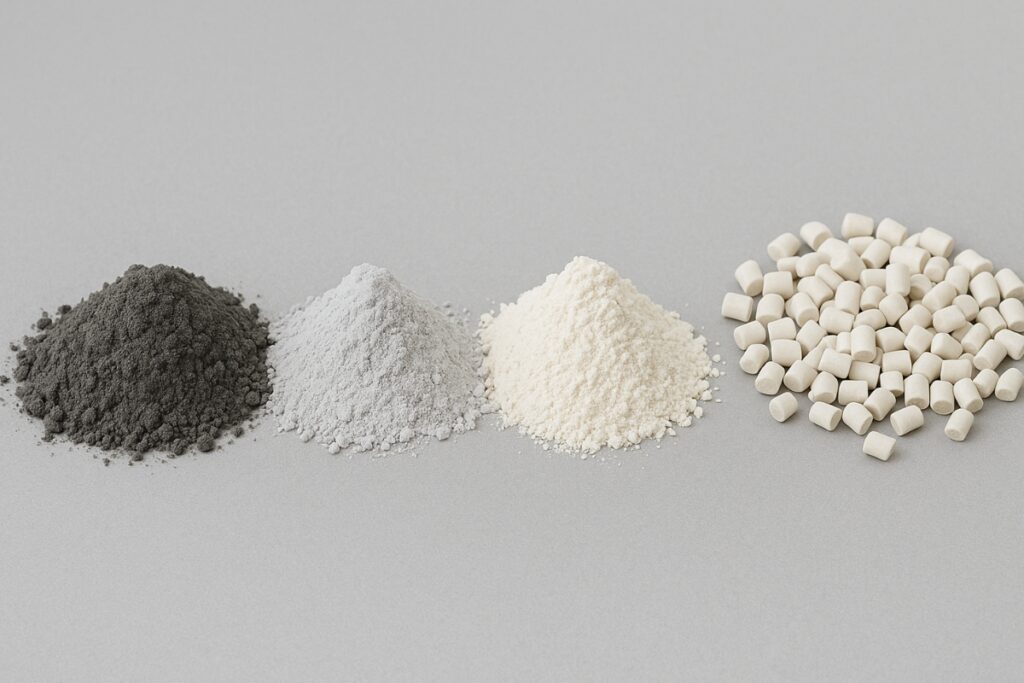
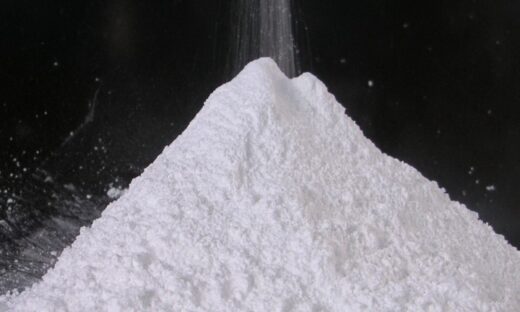
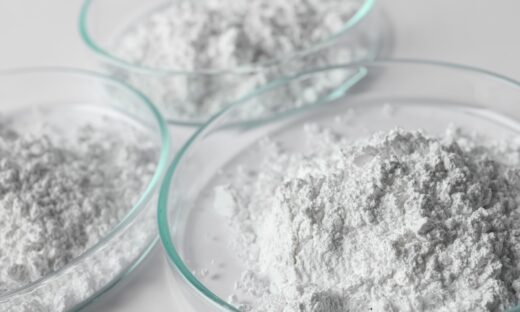
Fillers are materials added to polymers to modify mechanical, thermal, or economic performance. They are widely used across automotive, packaging, appliances, construction materials, and many other industries.
Common Filler Types
- Calcium carbonate (CaCO3): Cost-effective general-purpose filler
- Talc: Improves rigidity, heat resistance, and dimensional stability
- Mica: Similar to talc, used for stiffness and dimensional accuracy
- Glass fiber: Reinforcement for high-strength applications
- Magnesium hydroxide: Used in flame-retardant formulations
How Fillers Influence Processing
The behavior of fillers is strongly affected by particle size, particle shape, and surface treatment. These factors determine dispersibility, melt viscosity, feeding behavior, and overall process stability. Effective formulation therefore requires selecting both the right filler and the right compounding method.
Why Fillers Are Used
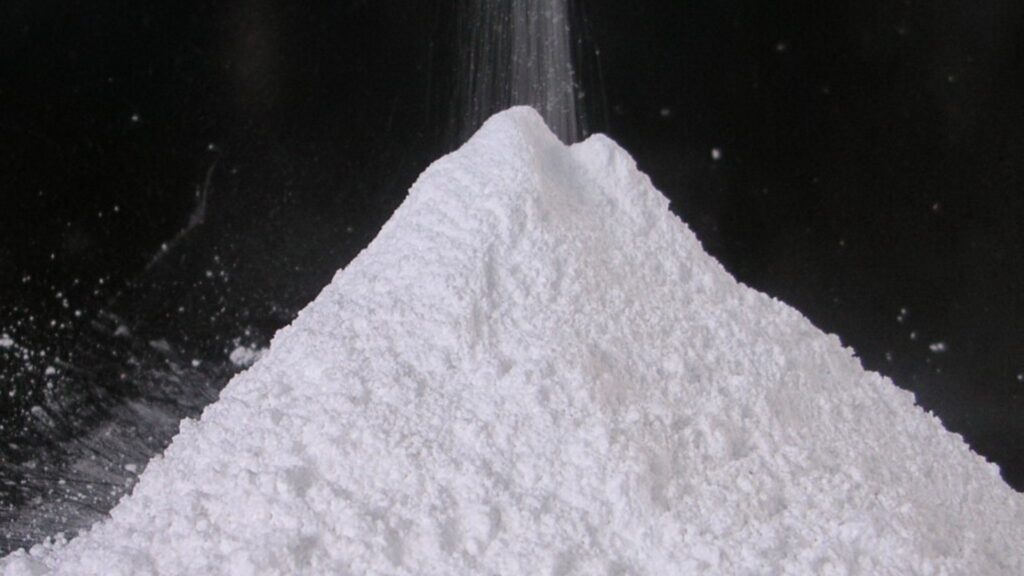
Fillers deliver multiple functional and economic benefits:
Mechanical and Thermal Enhancement
- Increased rigidity and stiffness (e.g., talc, mica)
PP–talc compounds, for example, are widely used in automotive applications.
Cost Optimization
- Partial resin replacement with CaCO3 or other cost-effective fillers
Lightweighting
- Use of hollow or low-density fillers to reduce part weight
Flame Retardancy
- Use of magnesium hydroxide and related additives in flame-retardant formulations
Selecting the appropriate filler type and loading level is a critical step that defines the performance of the final compound.
What Is High-Filler Compounding?
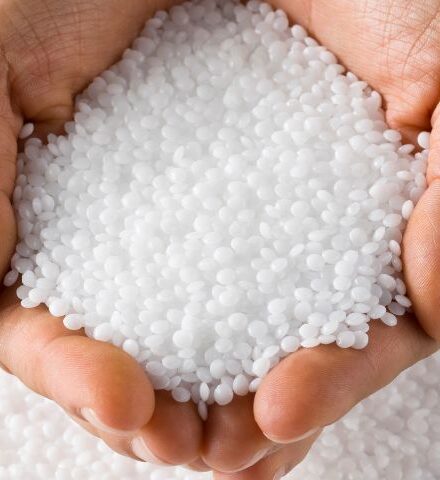
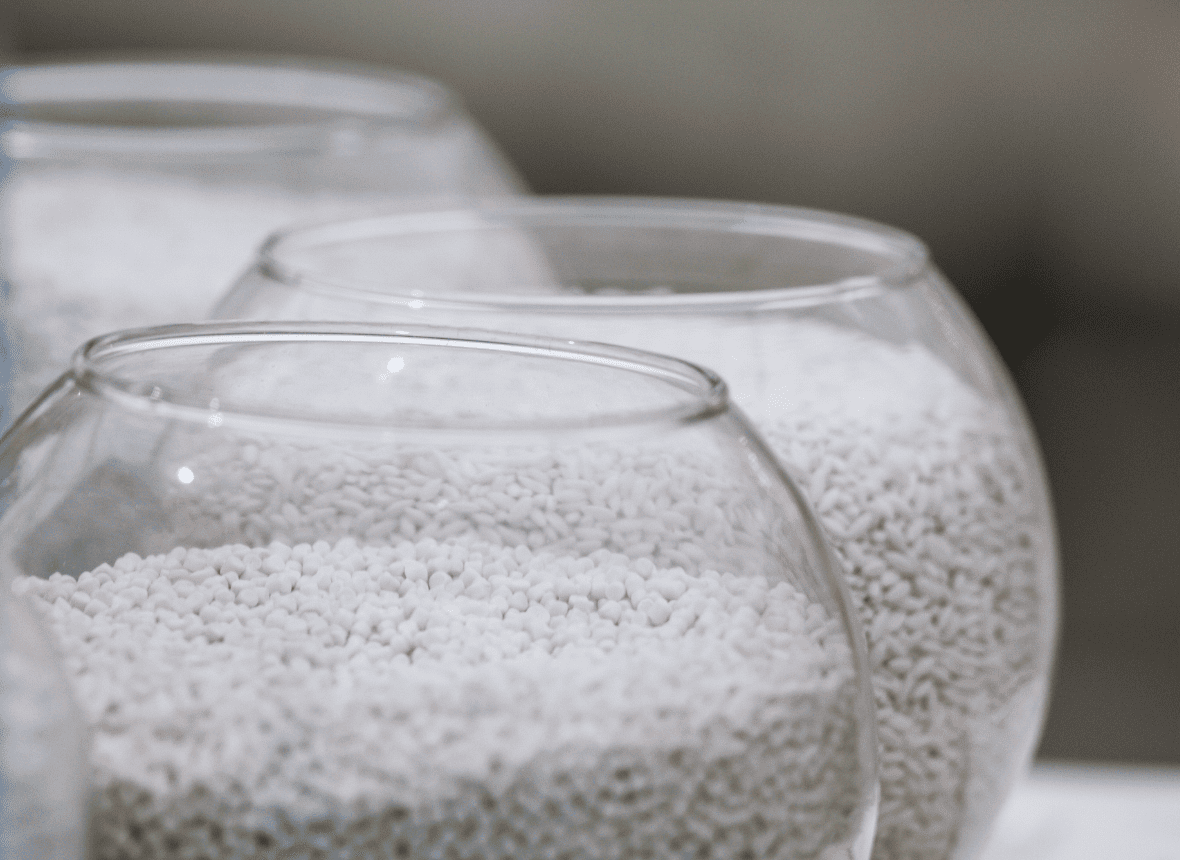
High-filler compounding refers to formulations with significantly elevated filler contents. Masterbatch grades may reach 70–80% filler loading, depending on the application and target properties.
Why Use High-Loading Compounds?
High-loading concentrates allow downstream processors—such as injection molders and sheet extruders—to fine-tune formulations with greater accuracy.
- Improved control over final material properties
- Reduced variability between production batches
- Greater flexibility in meeting different product requirements
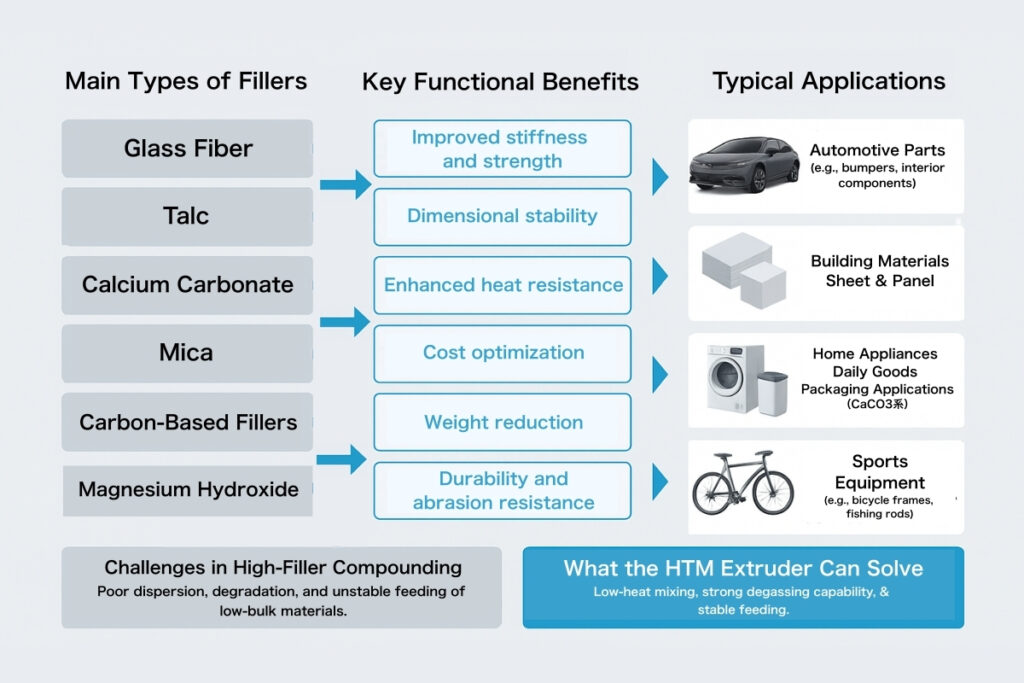
High-filler masterbatch is a practical strategy for achieving consistency and efficiency in plastics manufacturing.
Processing Challenges in High-Filler Compounding
While high-filler systems offer strong performance and cost advantages, they introduce well-known processing difficulties:
Dispersion Challenges
- Agglomeration due to poor dispersion
- Reduced mechanical properties
- Surface defects caused by filler clusters
Thermal Degradation
- Excessive shear heating in the extruder
- Polymer discoloration or degradation
Degassing Issues
- Entrapped moisture or air in fillers and polymers
- Bubbles or voids in the final product
Feeding Instability
- Low-bulk-density powders such as talc and mica causing feed limitation or surging
In practice, processors must control dispersion, degassing, and feeding—three critical factors that directly influence quality and throughput.
Efficient venting and stable feeding are also key topics in PET sheet recycling. For a deeper look at degassing in extrusion, see our technical article on PET Sheet Recycling Challenges in Southeast Asia and Technical Solutions with CTE’s HTM Twin-Screw Extruder.
How CTE’s HTM Extruders Solve These Challenges
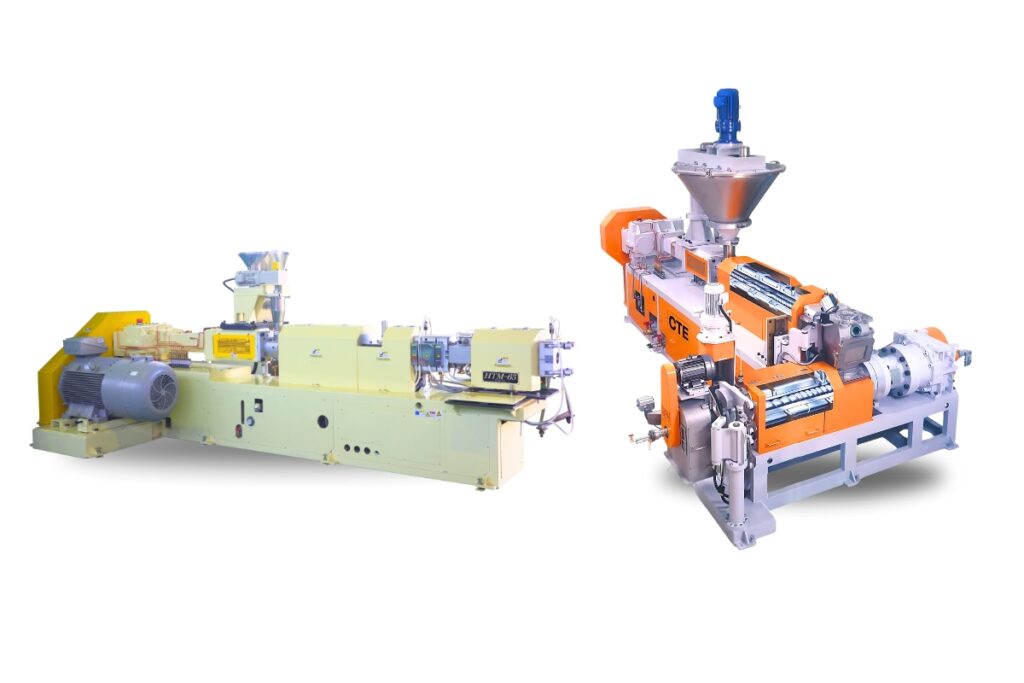
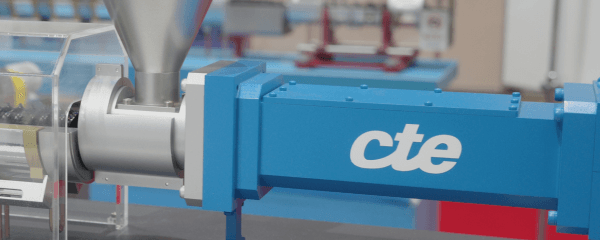
CTE’s HTM Twin-Screw Extruder Series is designed specifically to handle demanding formulations such as high-filler compounds, recycled materials, and biomass resins.
Superior Degassing Performance
CTE’s patented counter-rotating, non-intermeshing screw design provides:
- Efficient removal of moisture and entrapped air
- Reduced bubble formation and improved melt stability
- Improved feeding of low-bulk-density powders
- Stable, high-throughput operation
For more details on the screw design and system configuration, visit the HTM Twin-Screw Extruder overview and the HTM Tandem Compounding Twin-Screw Extruder page.
Low-Shear Rotor Mixing
Our rotor-based mixing elements are engineered to:
- Prevent excessive shear and thermal degradation
- Deliver uniform filler dispersion at high loading levels
- Maintain low melt temperatures for improved material quality
This combination of features makes the HTM series highly effective for applications where both dispersion and process stability are critical.
For conventional co-rotating compounding applications, please refer to the CTM Twin-Screw Compounding Extruder, which complements the HTM platform in CTE’s product lineup.
Case Studies and Evaluation Data
The following evaluation reports show how HTM technology performs under different high-filler conditions:
- Fine talc high-loading compound: process optimization
Optimization of Extrusion Process for Fine Talc High Filler Compounds - High-filler, high-dispersion compounding evaluation
Evaluation Test for High-Filler, High-Dispersion Compounding: HTM Tandem Twin-Screw Extruder - Calcium carbonate compounds: dispersion & throughput
Evaluation of Dispersion and Throughput in Calcium Carbonate-Filled Compounds
These studies confirm that the HTM series consistently delivers strong performance in the three key challenge areas: dispersion, degassing, and feeding.
Conclusion
Fillers are indispensable in plastics manufacturing, and high-filler compounding expands their benefits even further. However, these formulations require precise control of dispersion, venting, and feeding—demanding extrusion systems engineered specifically for such applications.
CTE’s HTM Twin-Screw Extruders offer proven performance for high-filler, recycled, and specialty materials. To explore real compounding performance in more detail, review our fine talc high-filler optimization, calcium carbonate dispersion and throughput test, and high-filler, high-dispersion evaluation report.
If you are considering high-filler compounding or evaluating challenging materials, please contact us to discuss testing and technical support using the HTM platform.